
Solution 01
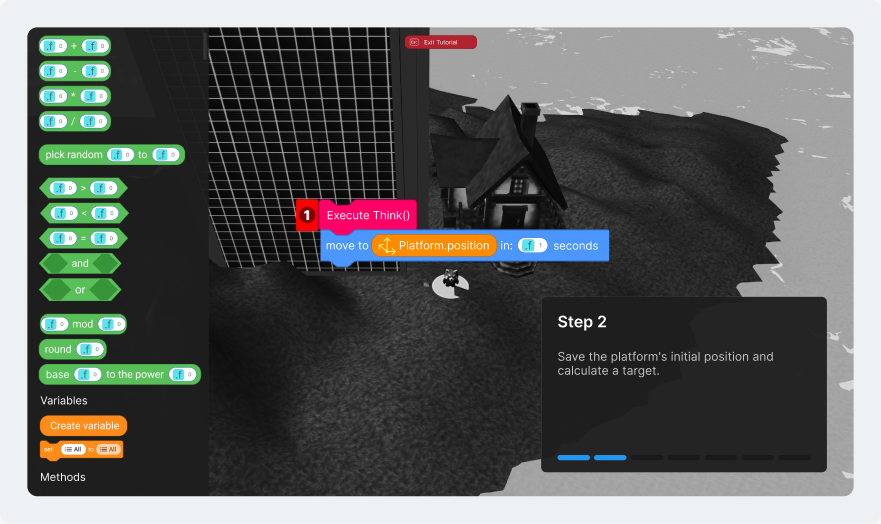
Visual Scripting
Block-based visual scripting allows students to create game logic without writing code.
Unity Technologies
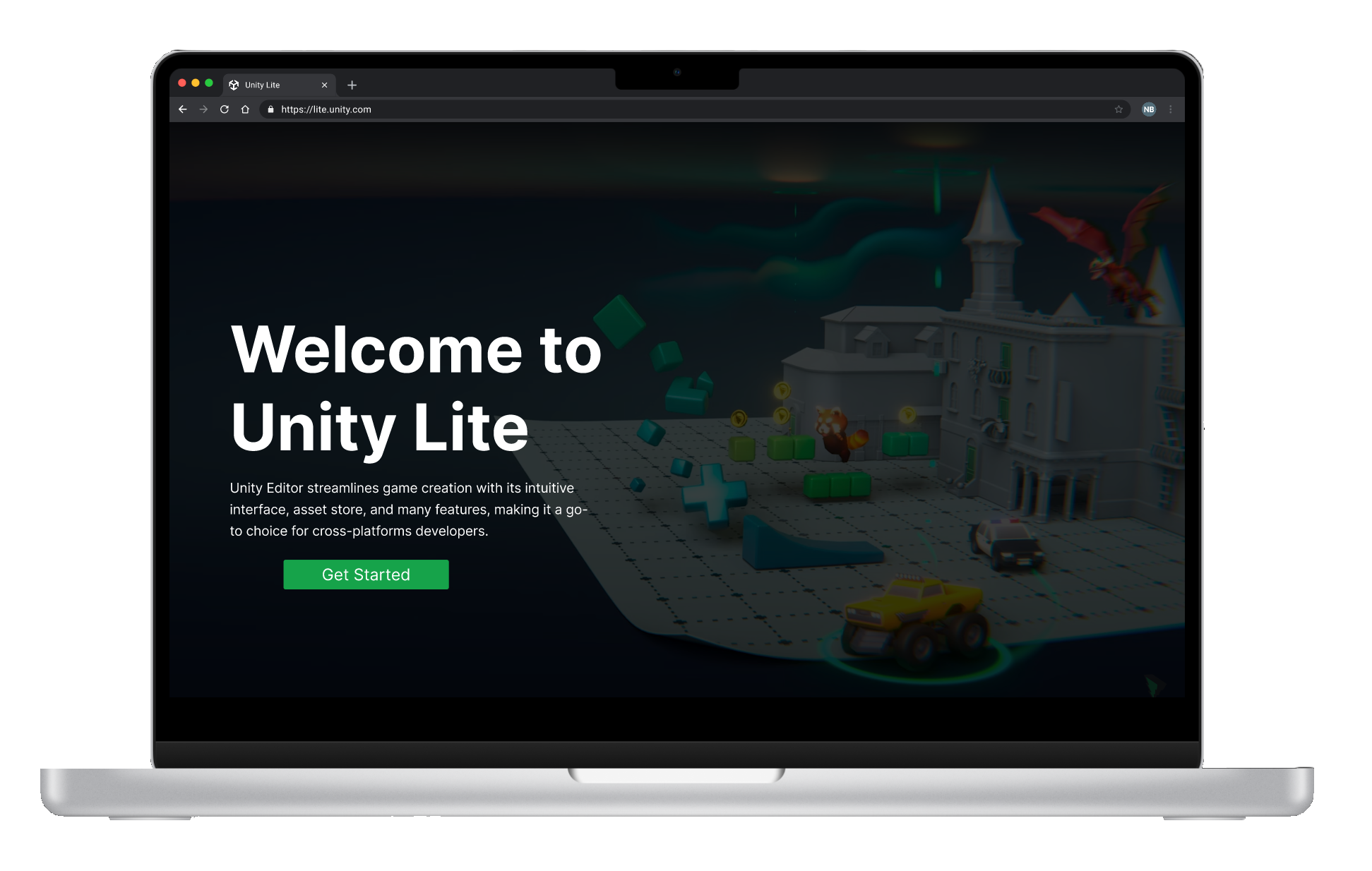
Overview
Can you guys build a platform
for high school classrooms?
We Got It.
Game development tools are powerful but overwhelming. Beginners face early confusion, and educators lack structured tools to manage classroom learning.
How might we increase the learnability of the Unity editor to foster collaboration for high school students and educators?
Solution 01
Block-based visual scripting allows students to create game logic without writing code.


Solution 02
Helping teachers stay on track, so they can help more students.
Solution 03
Guided tutorials help students learn the editor and start building quickly.
Use these tools to move, rotate, resize, duplicate, and organize objects while building.
Solution 04
Giving students access to video tutorials, interactive walk-throughs, and mini-lessons without having to leave the editor.

Solution 05
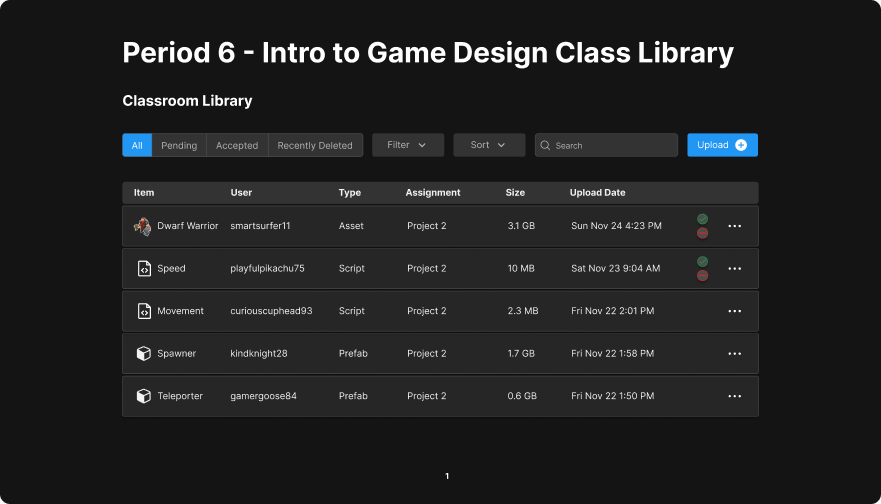
Where educators can view student-submitted assets for assignments.
Solution 06
A centralized library of curriculum and teaching resources for educators.




Solution 07
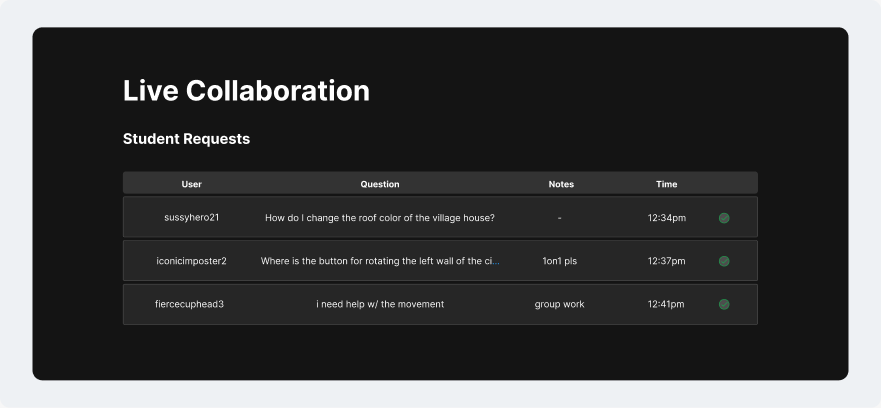
Students can request help while teachers respond to requests in the classroom.
Impact
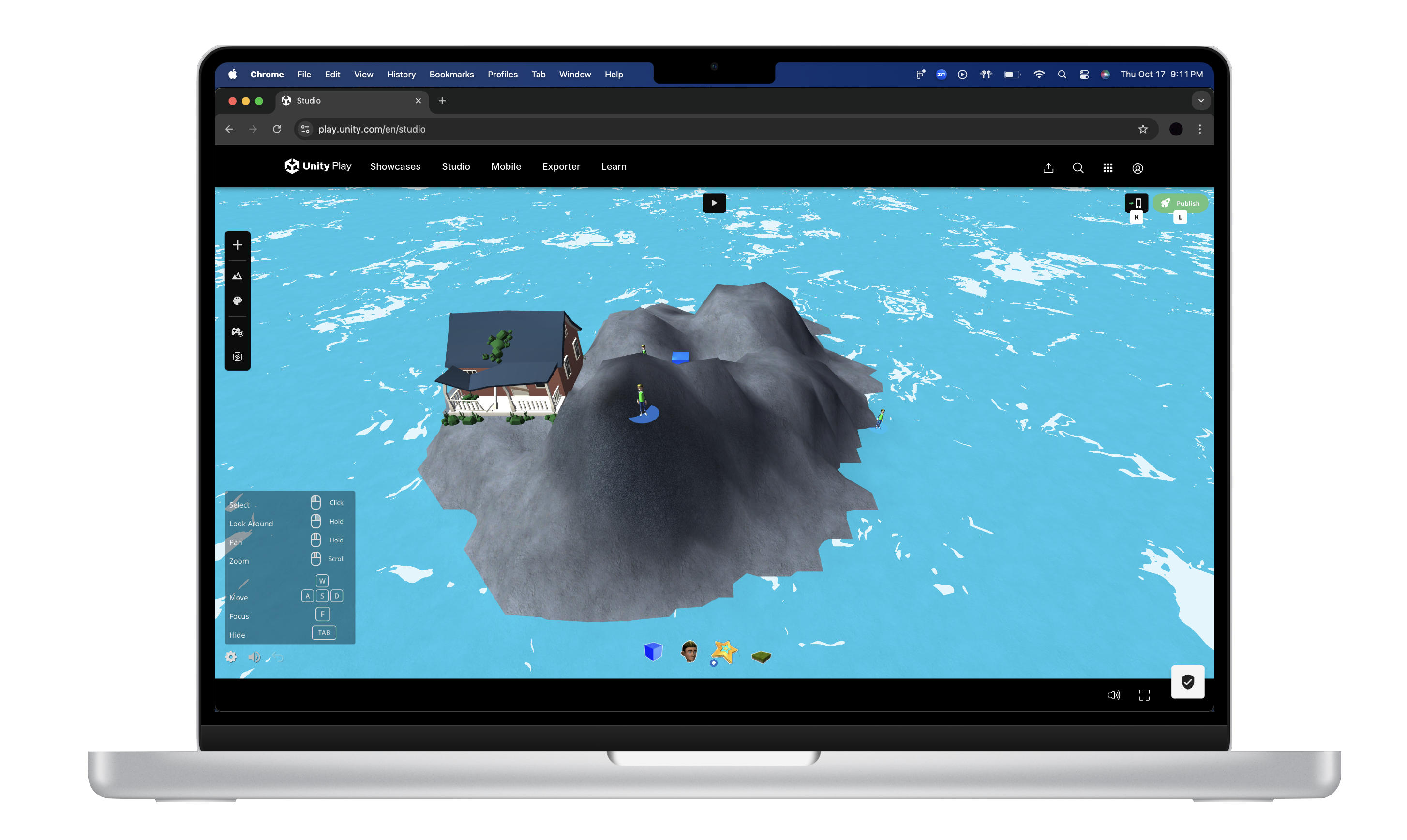
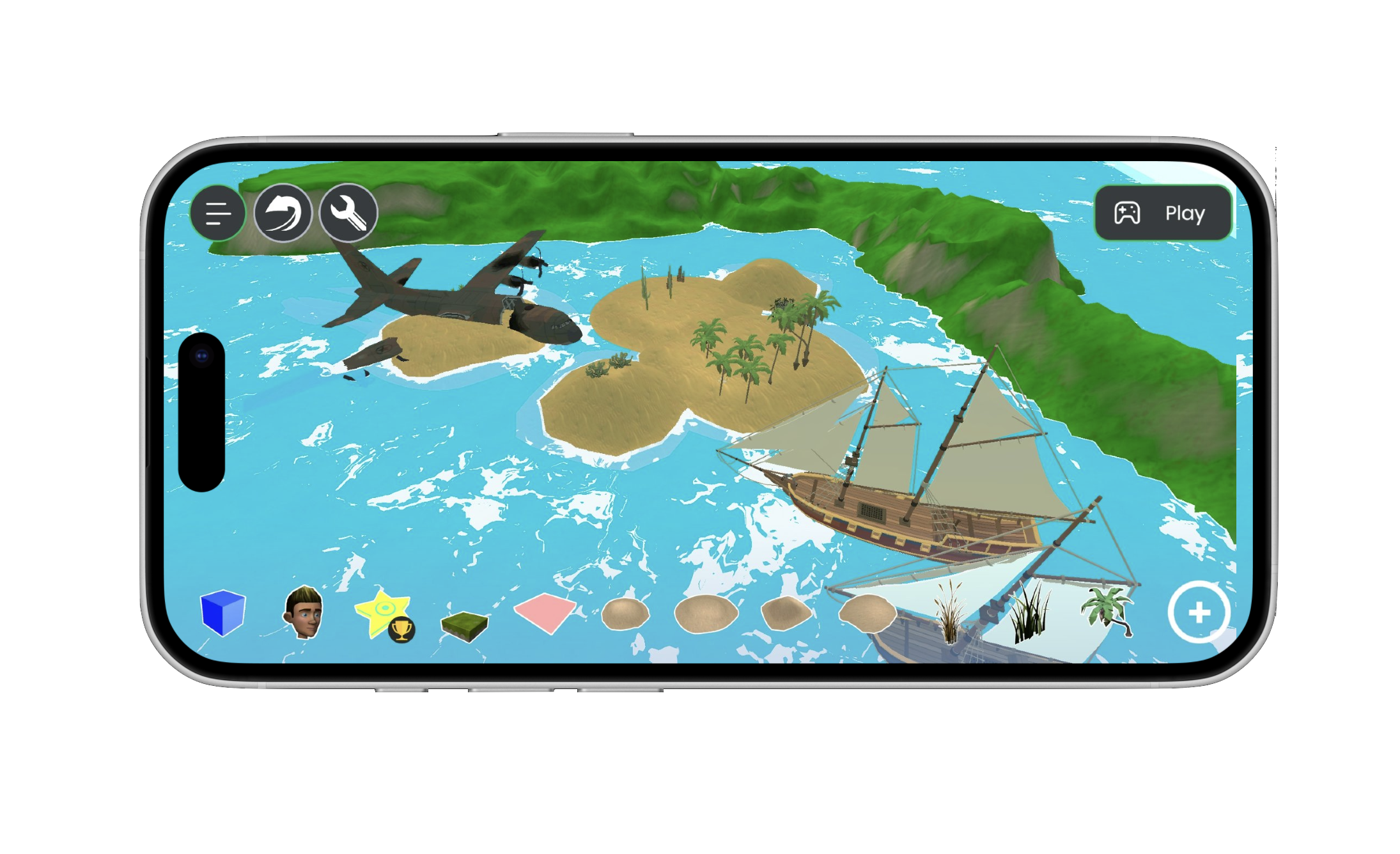
Integrated tutorials, guided walkthroughs, and visual scripting reduce the need for external resources and make the first steps into game development far more approachable for beginners.
Classroom dashboards and live help tracking give teachers better insight into student progress, allowing them to identify confusion early and support students in real time.
By combining onboarding, collaboration, and classroom management into a single platform, Unity Lite creates a structured learning environment that supports both students and educators from day one.
Research
Our team conducted 5 distinct research methods. Alongside collecting 86 surveys, noticing how users interact with current platforms exposed friction around navigation, setup, and technical troubleshooting.
Ideation
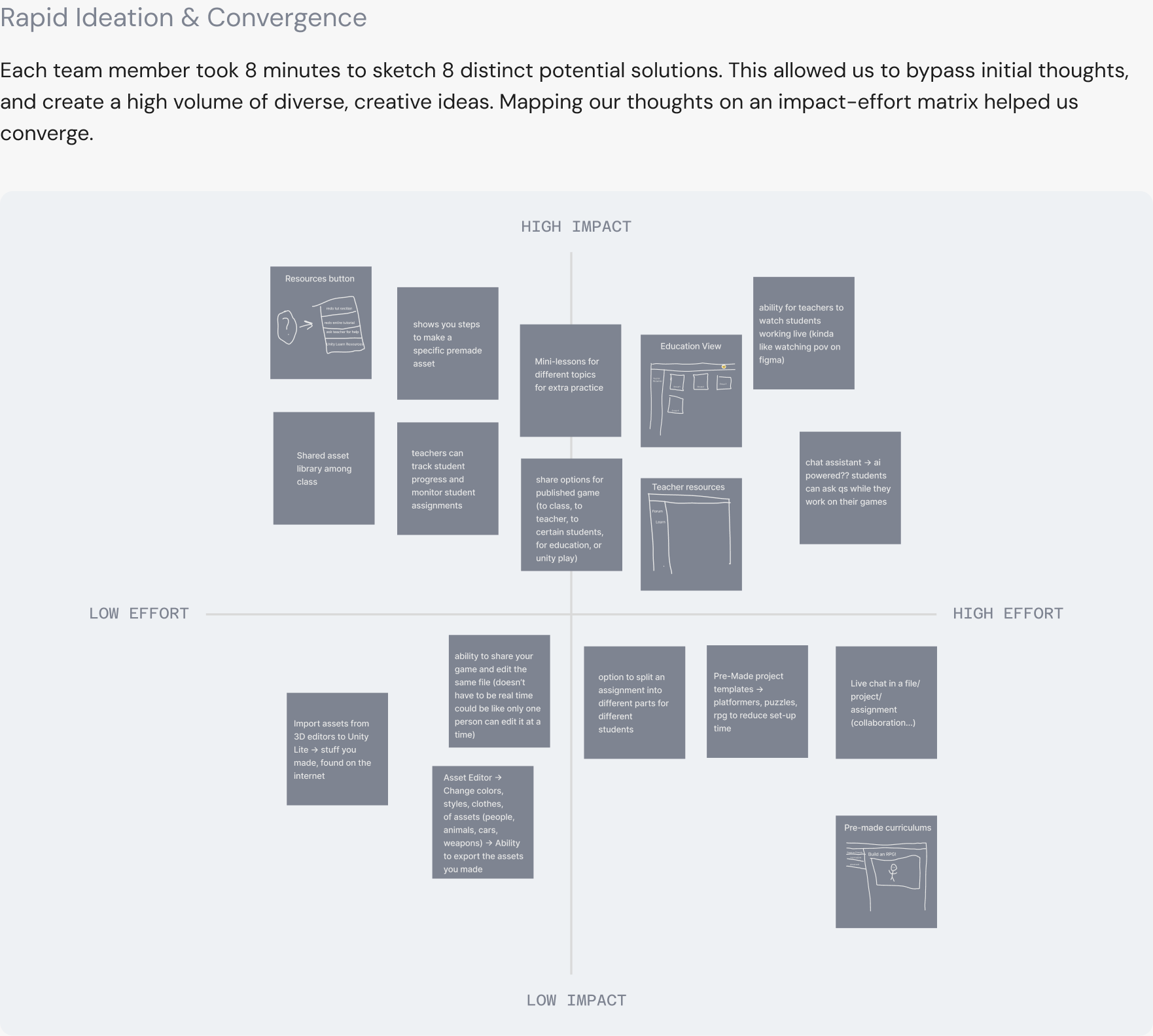
Each team member took 8 minutes to sketch 8 distinct potential solutions. Mapping our thoughts on an impact-effort matrix helped us converge.
System Design
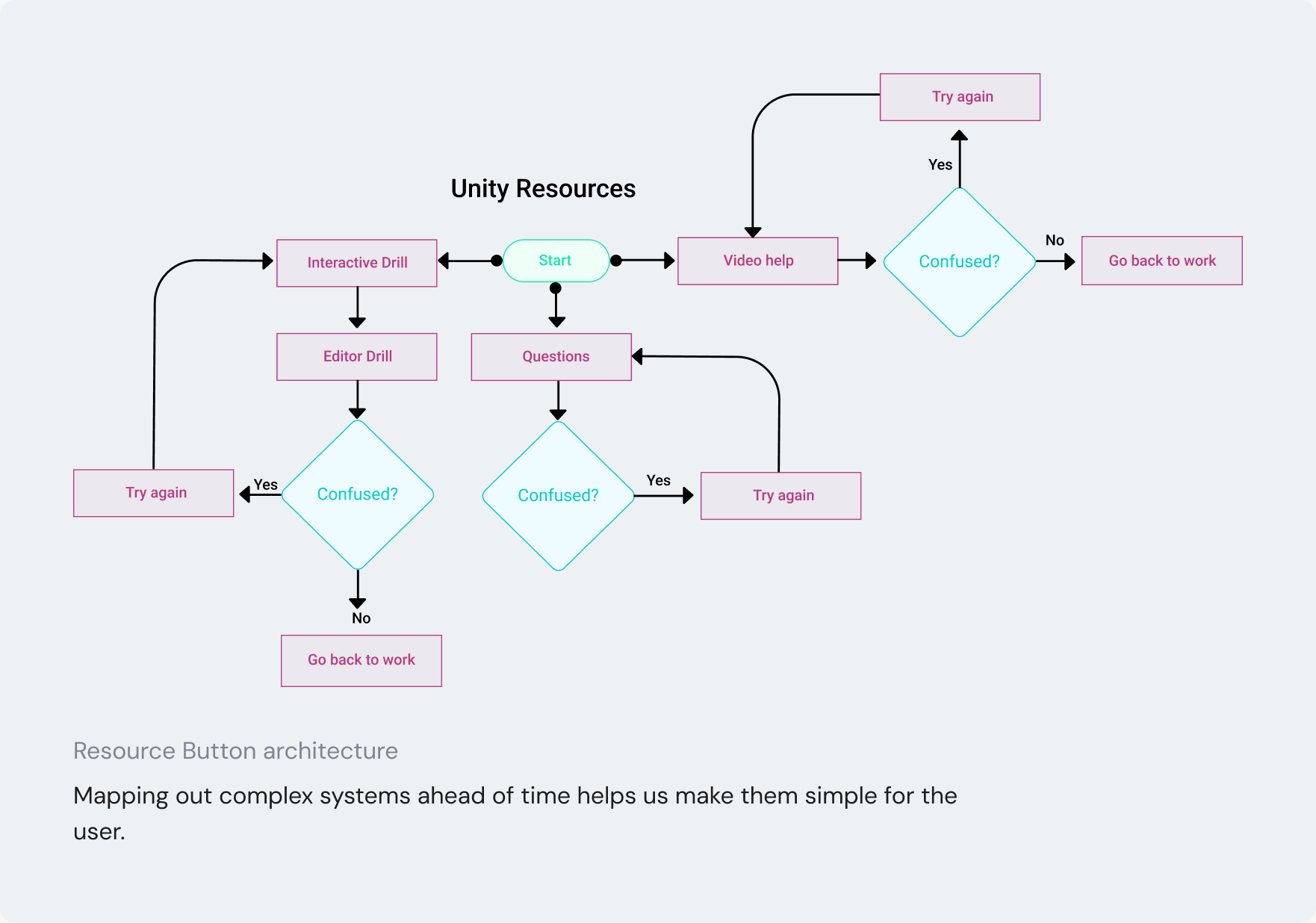
Before designing the interface, I mapped how learners could move between drills, questions, and video help without pulling them out of their work.
Iteration
Reflection
Sitting in real classrooms and talking to students revealed dynamics about the distractions, the collaboration between friends, and the moments of confusion and excitement. Those lived experiences shaped our decisions far more than assumptions ever could.
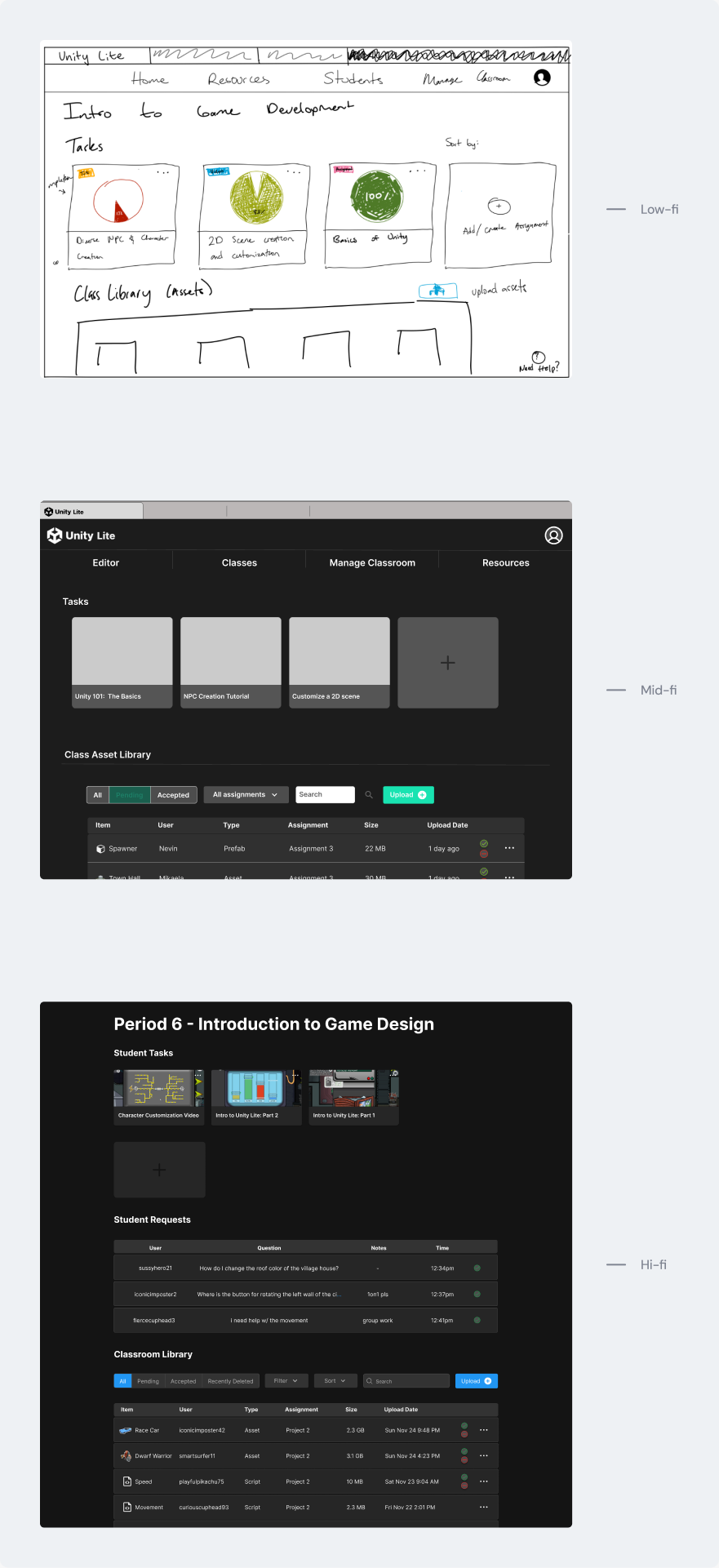
Designing a platform from scratch meant thinking through entire systems, flows, and edge cases at once. Spending time planning (even on paper) before jumping into high fidelity designs gave us confidence in what we were building.